Start with the Workpiece and Production Target
A reliable powder coating line begins with production data, not a standard equipment list. The engineering team needs the maximum and minimum workpiece dimensions, weight, material, surface condition and hanging method. It also needs the target output by hour or shift, the number of colors, expected changeover frequency and the required coating quality. Large structural parts may need floor transport or self-propelled hoists, while smaller parts can often use a continuous overhead conveyor. These decisions affect every downstream section, including booth size, oven length, rail loading and ventilation volume. Recording the largest real workpiece is especially important because a small dimensional allowance can become a major installation problem after the line is manufactured.
The available workshop is equally important. Column positions, roof height, doors, crane travel, utility entrances and operator routes should be marked on an accurate layout. A custom line can then be arranged around actual building constraints instead of forcing the factory to adapt to a generic layout. YUEZE uses this project information to configure non-standard coating equipment, conveying and environmental treatment as one coordinated system.
Match Pretreatment to the Material and Finish
Pretreatment determines whether the finished powder film can bond consistently to the substrate. Oil, rust, welding residue and dust must be addressed before spraying. A line may use spray pretreatment, immersion stages, manual cleaning or a combination selected for the workpiece and corrosion target. The number of stages, tank or chamber dimensions, heating method, drainage and water-treatment requirements should be established during process design. If pretreatment is undersized, the booth and oven cannot compensate for poor surface preparation. If it is unnecessarily complex, operating cost, water use and maintenance increase without improving the result.
Dry-off must also be considered between wet pretreatment and powder application. Residual moisture trapped in seams or cavities can cause coating defects and rework. Air knives, drip zones and a dry-off oven should be sized around the workpiece geometry and line speed. The best process is therefore the one that achieves the required cleanliness and corrosion performance with stable, maintainable operating steps.
Design the Powder Booth and Recovery System Together
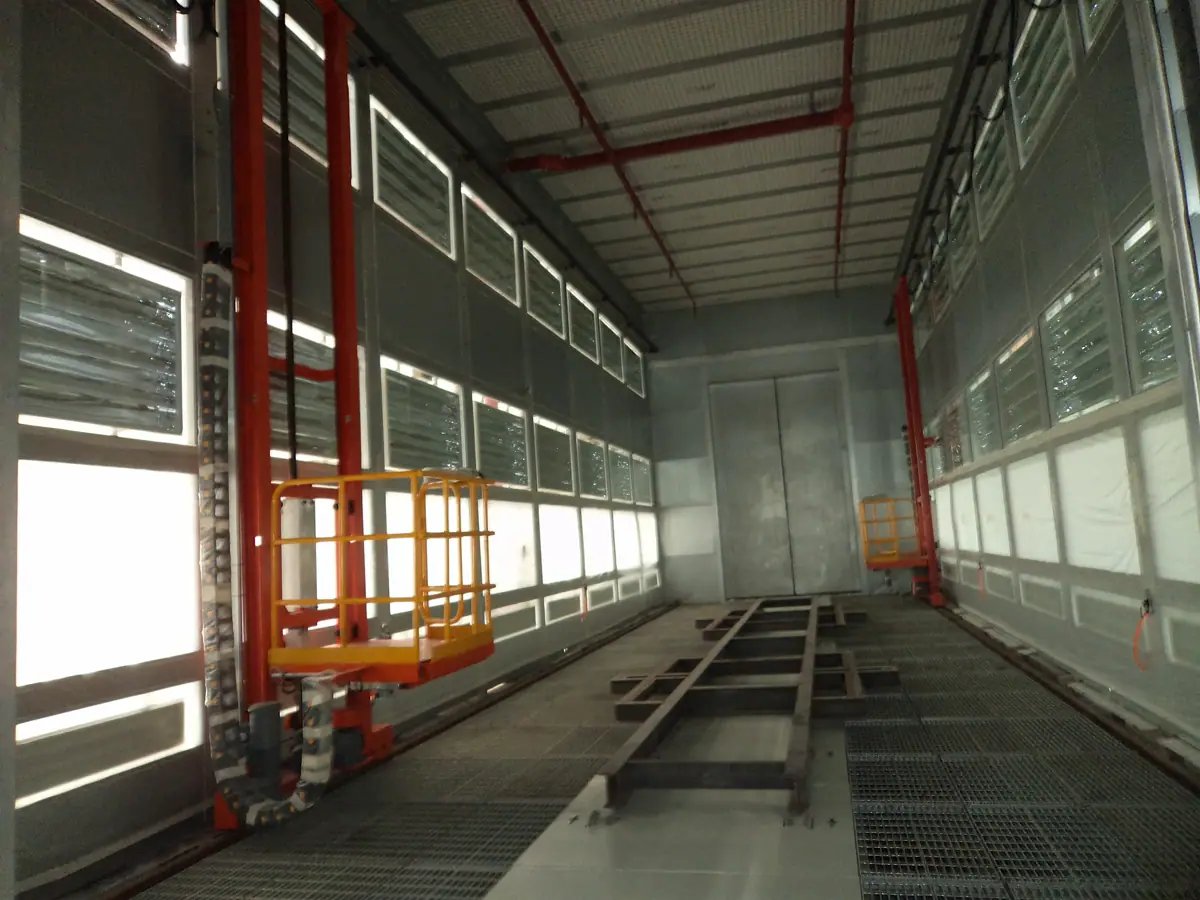
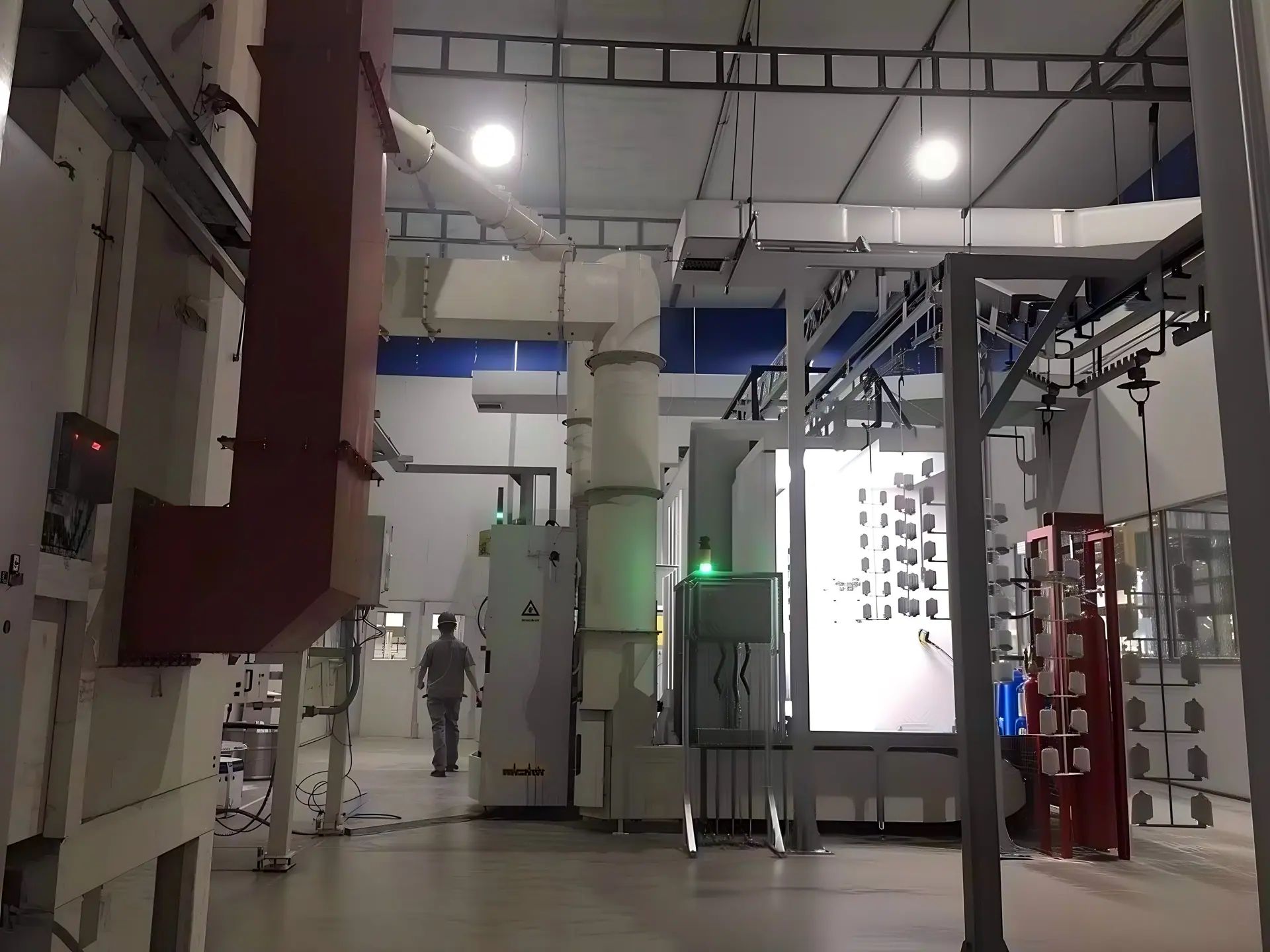
The powder booth is only one part of the application system. Automatic reciprocators, manual touch-up stations, gun quantity, powder supply, cyclone recovery and cartridge filtration must work at the same airflow and production rhythm. Booth openings should be large enough for safe clearance but controlled so powder remains contained. For frequent color changes, the internal shape, material and cleaning access have a direct effect on downtime. For long campaigns in one color, recovery efficiency and filter maintenance may carry more weight than rapid cleaning.
Workpiece orientation should be tested against likely spray-gun positions. Deep recesses, large frames and complex castings can create Faraday-cage effects or shadowed areas. Automatic guns may provide repeatability, while a manual station can cover difficult surfaces. The final arrangement should give operators safe access without interrupting conveyor movement or contaminating clean zones.
Coordinate Curing, Conveying and Line Speed
Curing performance depends on metal temperature and dwell time rather than oven air temperature alone. Heavy workpieces heat more slowly than thin sheet parts, so oven length, burner capacity, circulation and insulation must be calculated around the actual load. The conveyor speed links the oven calculation to the required output. Changes to speed affect pretreatment dwell, spray time, flash-off and cooling, which is why each process zone should be designed as part of one line balance.
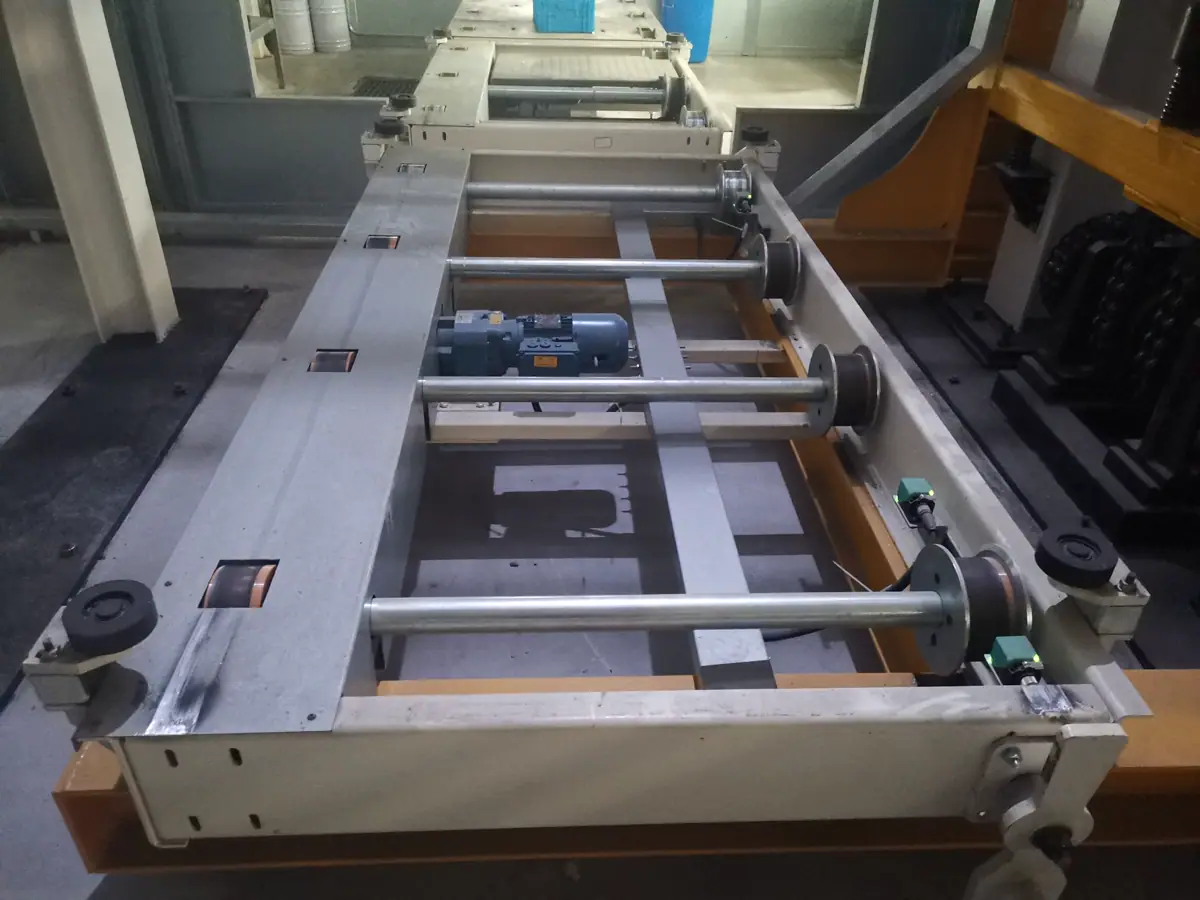
Conveyor selection also influences flexibility. Overhead systems save floor space and suit suspended parts. Floor conveyors and roller tables can support bodies, platforms and heavy assemblies. Self-propelled hoists allow independent movement and buffering between processes. A custom layout may combine technologies when workpieces differ greatly. Maintenance access, lubrication points, loading ergonomics and emergency recovery routes should be included before the rail or foundation drawings are finalized.
Plan Environmental Control and Maintenance from Day One
Powder containment, dust collection, exhaust-air balance and workshop cleanliness are operational requirements, not later accessories. Filters need suitable access for inspection and replacement. Collected powder and cleaning waste need defined handling procedures. If the wider factory also includes liquid-painting, grinding, blasting or curing processes, dust and VOC treatment may require separate systems selected for the actual pollutant and concentration. YUEZE product materials cover dust collectors and several waste-gas treatment configurations that can be integrated with coating equipment according to project conditions.
Controls should make the process understandable to operators. Interlocks can prevent spraying without ventilation, stop heating when circulation fails and coordinate conveyor movement with doors and process equipment. Clear alarms, accessible electrical cabinets and documented maintenance points reduce troubleshooting time. A stable line is not simply automated; it is designed so routine cleaning, filter changes and inspection can be completed safely without unnecessary production loss.
Prepare a Useful Request for Quotation
A productive quotation package should include workpiece drawings or photographs, size and weight ranges, material, hourly output, coating specification, current process, available workshop layout and local utility conditions. It should also state whether loading is manual or automatic, how many colors are used and which environmental standards apply at the installation site. With these inputs, the supplier can propose a process flow, equipment configuration, line footprint and utility estimate that can be reviewed before detailed engineering. Careful preparation at this stage reduces assumptions, shortens technical discussion and creates a stronger foundation for a powder coating line that remains practical throughout its service life.
Discuss Your Requirements with YUEZE
Every coating and conveying project is different. Send your workpiece drawings, capacity, process and site information for a project-specific equipment discussion.
Contact the Project Team