The Choice Depends on the Production Task
Manual and robotic spray booths solve the same fundamental problem: they create a controlled enclosure for applying coating while managing air movement, overspray and operator safety. The correct configuration depends on product mix, daily volume, coating specification and the geometry of the workpiece. A factory producing many low-volume custom parts may value flexibility and fast setup. A high-volume line producing repeatable parts may place greater value on automatic path control and consistent film build. The decision should therefore be based on the complete production task rather than the assumption that one technology is always more advanced.
Before comparing equipment, define the workpiece size range, weight, material, coating type and required finish. Record the number of part families, color-change frequency, takt time and acceptable rework rate. The booth must also fit the workshop, conveyor arrangement and environmental treatment system. These inputs reveal whether manual spraying, robotic spraying or a combined process offers the best balance.
Where Manual Spray Booths Perform Well
Manual booths are practical when products change frequently or surfaces require visual judgment during application. A trained operator can adapt the gun angle, distance and movement to complex shapes without creating a new robot program for every variation. This makes manual spraying useful for repair work, prototypes, furniture, metal components, vehicle parts and large structures produced in smaller batches. A booth can be configured as a fixed room or connected to an automated conveyor, depending on handling requirements.
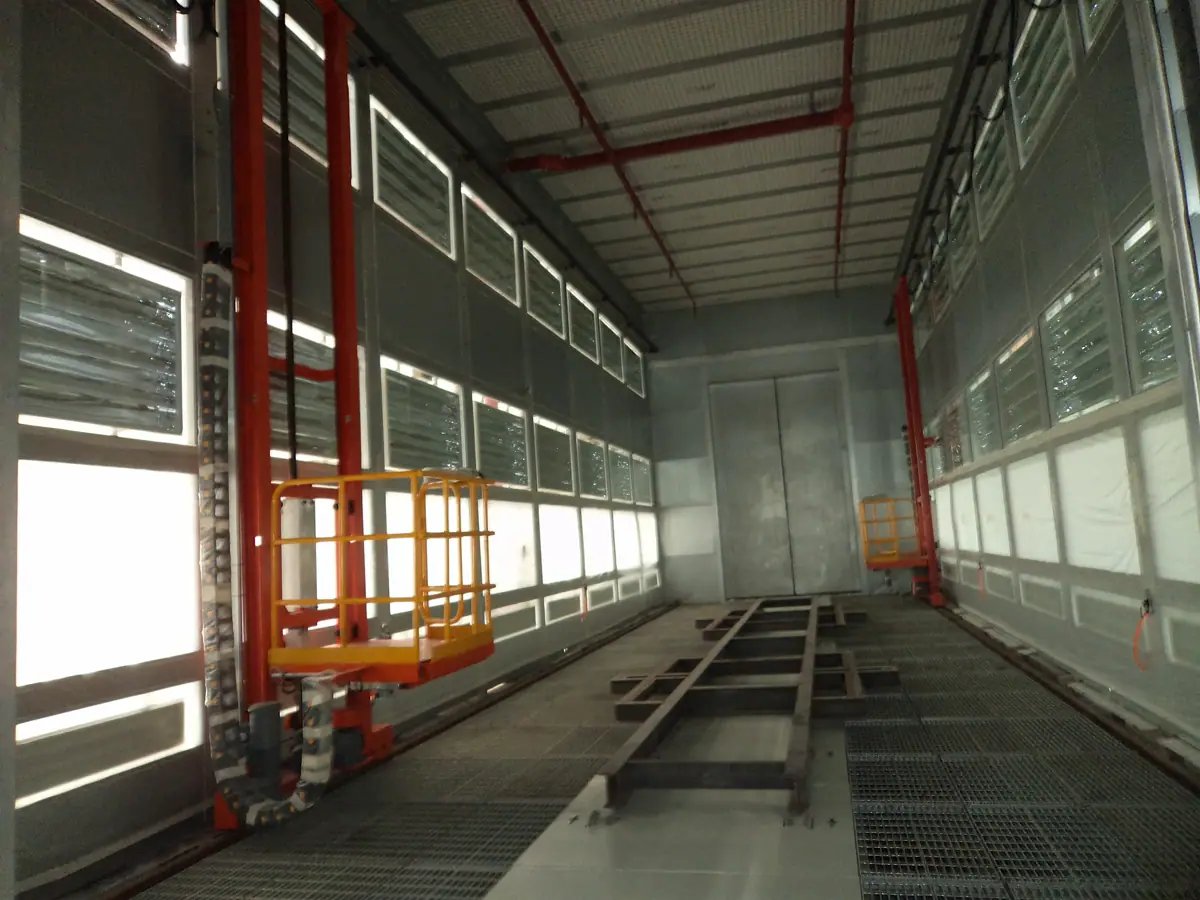
Good manual performance still depends on engineering. Stable supply and exhaust airflow helps control contamination and carries paint mist toward the treatment system. Bright lighting allows operators to judge wet coverage and surface defects. Grated floors, side extraction or water-curtain and dry-filter arrangements can be selected for the process. Three-dimensional lifting platforms may be added when operators need safe access to tall vehicles or industrial structures. Manual equipment is flexible, but it should never rely on operator skill to correct poor ventilation or an unsuitable workspace.
Where Robotic Spraying Adds Value
Robotic booths are attractive when the workpiece and production rhythm are repeatable. Once a spray path has been developed, the robot can reproduce gun speed, distance, angle and triggering across many cycles. This can improve coating consistency, reduce variation between shifts and limit the time workers spend inside the spray zone. Robot stations are widely considered for automotive components, steel structures, castings, panels and other products requiring regular high-volume coating.
Automation must include more than a robot arm. The booth enclosure, ventilation, paint or powder delivery, workpiece positioning, conveyor control and safety system must operate together. Fixtures need to present each surface predictably, and the control program needs clear product recipes. Maintenance access is essential for the applicator, hoses, protective covers and robot wrist. If parts arrive in inconsistent positions or the surface is not prepared consistently, automation will repeat the inconsistency rather than remove it.
Airflow and Filtration Matter in Both Systems
Whether spraying is manual or robotic, booth airflow affects cleanliness, overspray capture and coating quality. Too little extraction allows mist or powder to escape. Excessive or turbulent airflow can disturb the spray pattern, increase material use and introduce dust. Supply air should be filtered and distributed evenly, while exhaust should be matched to booth openings and the selected paint-mist or powder-recovery system. Constant-temperature and humidity control may be considered where finish requirements or local climate justify it.
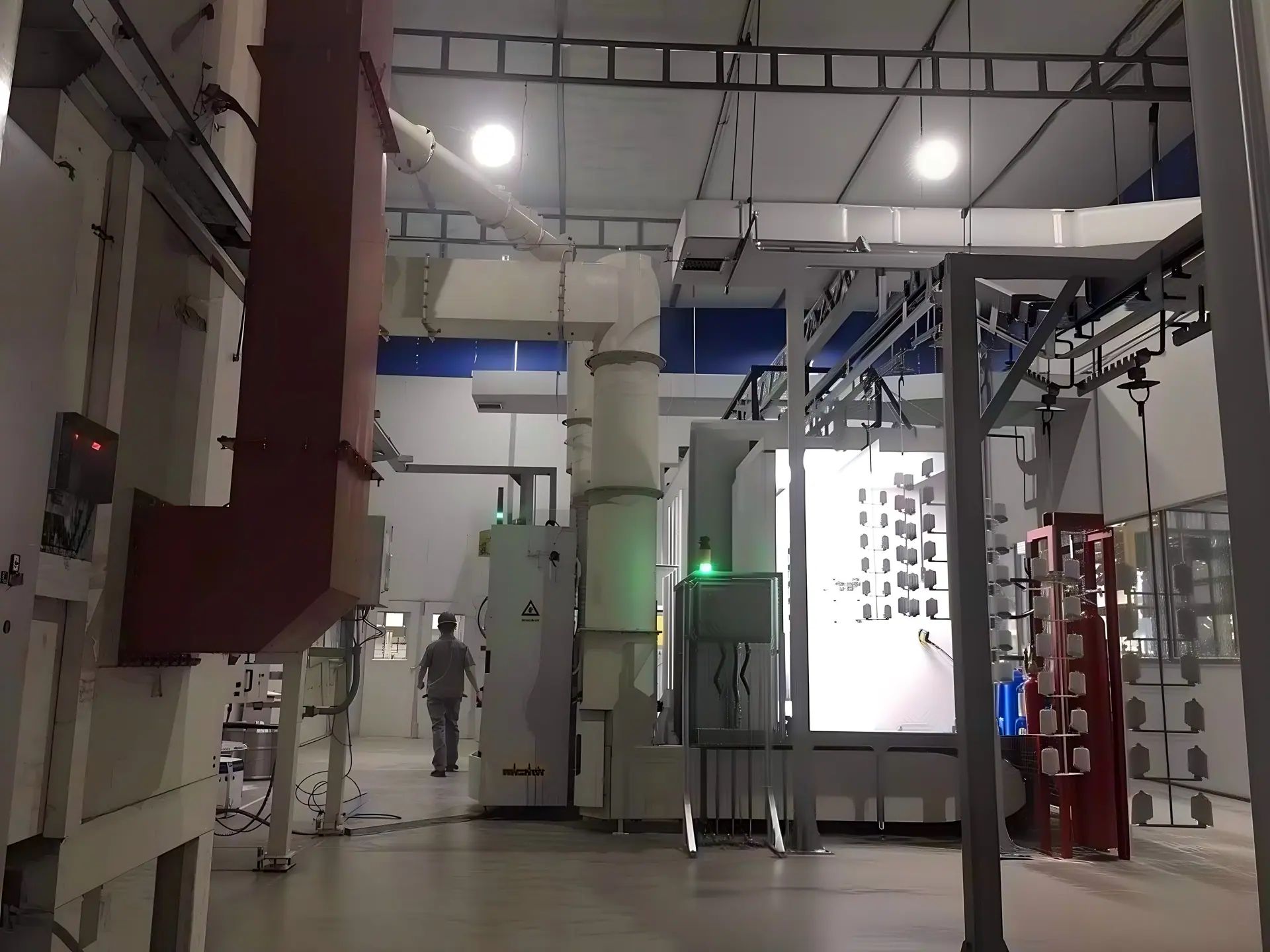
For liquid paint, the treatment path may use dry filters, water curtains and downstream VOC equipment selected for the coating chemistry and exhaust volume. Powder booths commonly use cartridge filtration and recovery equipment. Filters, ducts and fans require safe inspection access. Pressure indication and maintenance schedules help operators identify restriction before airflow becomes unstable. These details often have more influence on daily performance than the visible difference between a person and a robot holding the spray gun.
Consider Handling, Changeover and Support
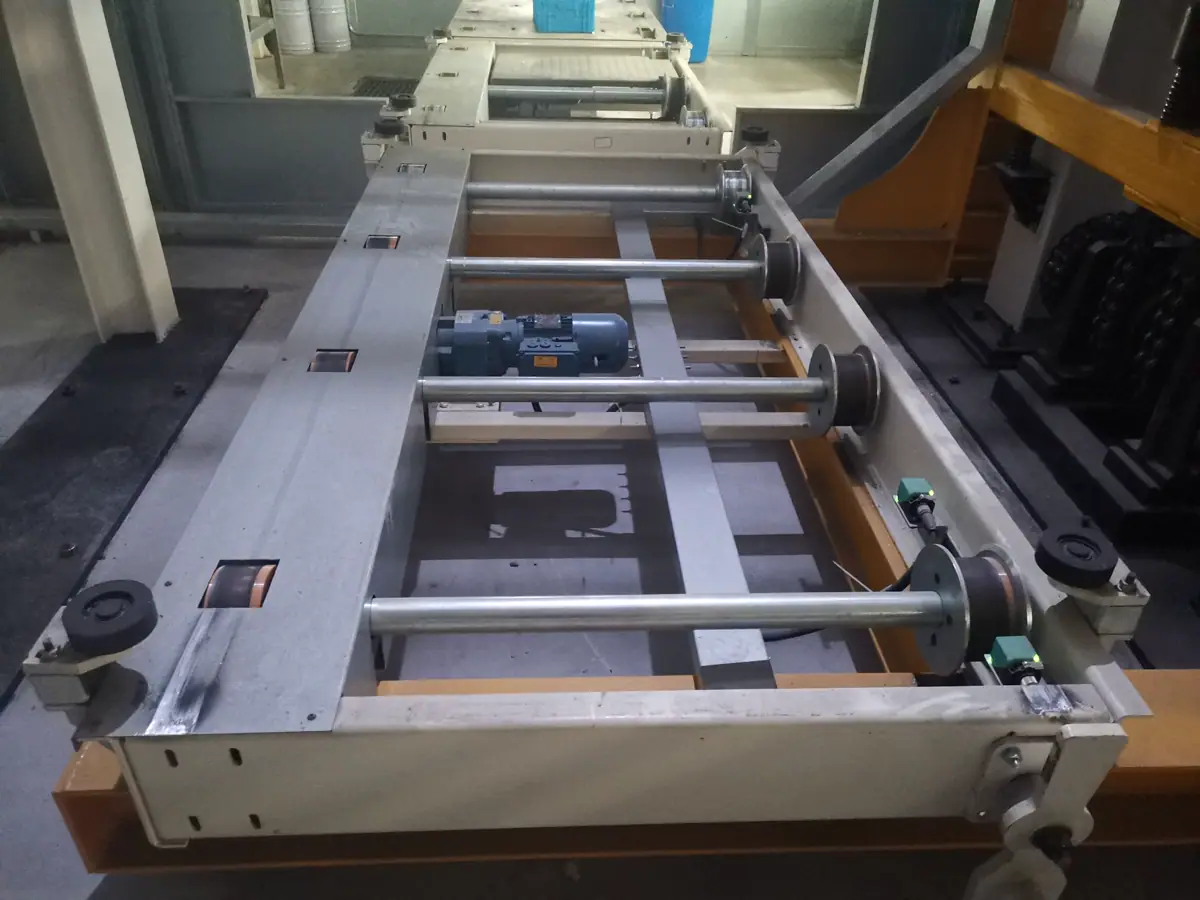
A standalone booth may be sufficient for occasional coating, but higher output usually connects spraying with preparation, flash-off, curing and cooling. Overhead chains, floor conveyors, roller systems or self-propelled hoists can move workpieces through the process. The selected handling method must provide accurate positioning at robotic stations and safe access at manual stations. Buffers may be needed so cleaning or inspection does not stop the entire line.
Color change is another important comparison. Manual systems may change quickly when quantities are small, while a robotic line needs coordinated cleaning of applicators, supply equipment and the booth. Recipe management reduces setup errors, but physical cleaning time remains. Training should cover both production and recovery from faults. Local maintenance capability, spare parts and remote or on-site technical support should be discussed before the final configuration is approved.
A Hybrid Layout Can Be the Best Answer
Many projects do not need an absolute manual-or-robotic choice. Robots can coat predictable surfaces while an operator completes difficult recesses or inspects coverage at a touch-up station. A line may begin with manual production and reserve space, controls and utilities for later automation. Conversely, a robotic system may include a manual bypass for unusual parts. The most effective decision compares lifetime output, labor, coating quality, changeover and maintenance against the real product mix. Sharing representative workpieces, production targets and workshop drawings allows YUEZE to evaluate booth dimensions, airflow, filtration, handling and optional automation as a complete custom solution.
Discuss Your Requirements with YUEZE
Every coating and conveying project is different. Send your workpiece drawings, capacity, process and site information for a project-specific equipment discussion.
Contact the Project Team