Treat the Line as One Production System
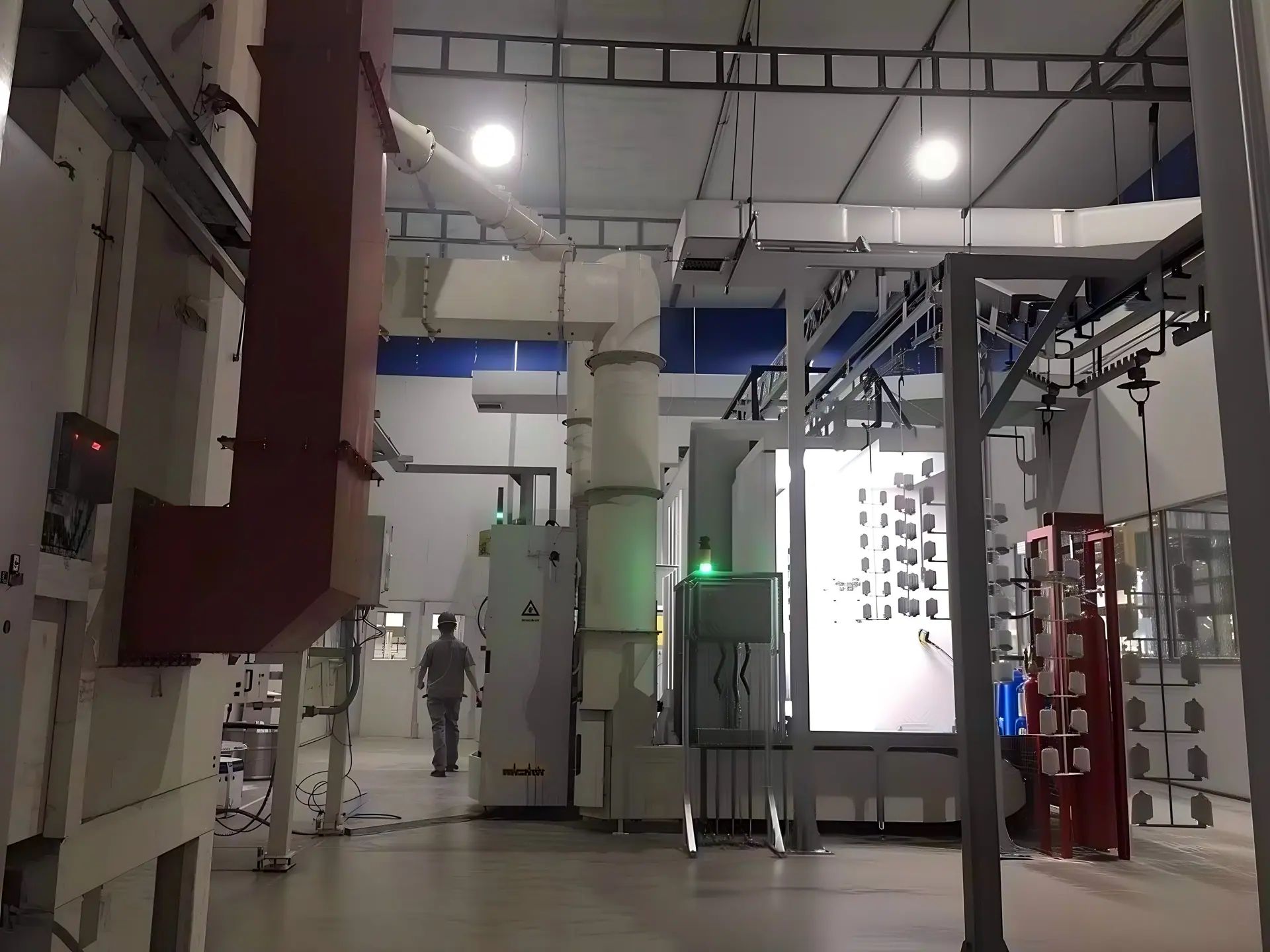
A coating project may be described as a collection of booths, ovens and conveyors, but operators experience it as one continuous production system. A delay in one zone changes loading upstream and curing time downstream. Poorly balanced exhaust can disturb booth pressure or draw contamination from a neighboring process. A conveyor that cannot buffer workpieces may force an oven or spray station to stop during inspection. For these reasons, material handling and environmental control should be defined at the same time as pretreatment, spraying and drying.
System planning begins with a process flow showing every operation from loading to unloading. Each stage should include its required dwell time, workpiece spacing, temperature, ventilation and access. The flow can then be placed within the actual workshop while accounting for columns, doors, cranes, maintenance aisles and utilities. This approach exposes conflicts before foundations, ducts and rails are installed.
Select a Conveyor for the Workpiece and Process
Overhead conveyors are widely used for parts that can be suspended from hooks or fixtures. They keep the floor relatively clear and can route workpieces through pretreatment, coating and curing zones. Hook design, chain pitch, turning radius and load limits must match the parts. Drainage orientation after wet pretreatment and electrical contact during electrophoresis or powder coating may also influence the hanger design.
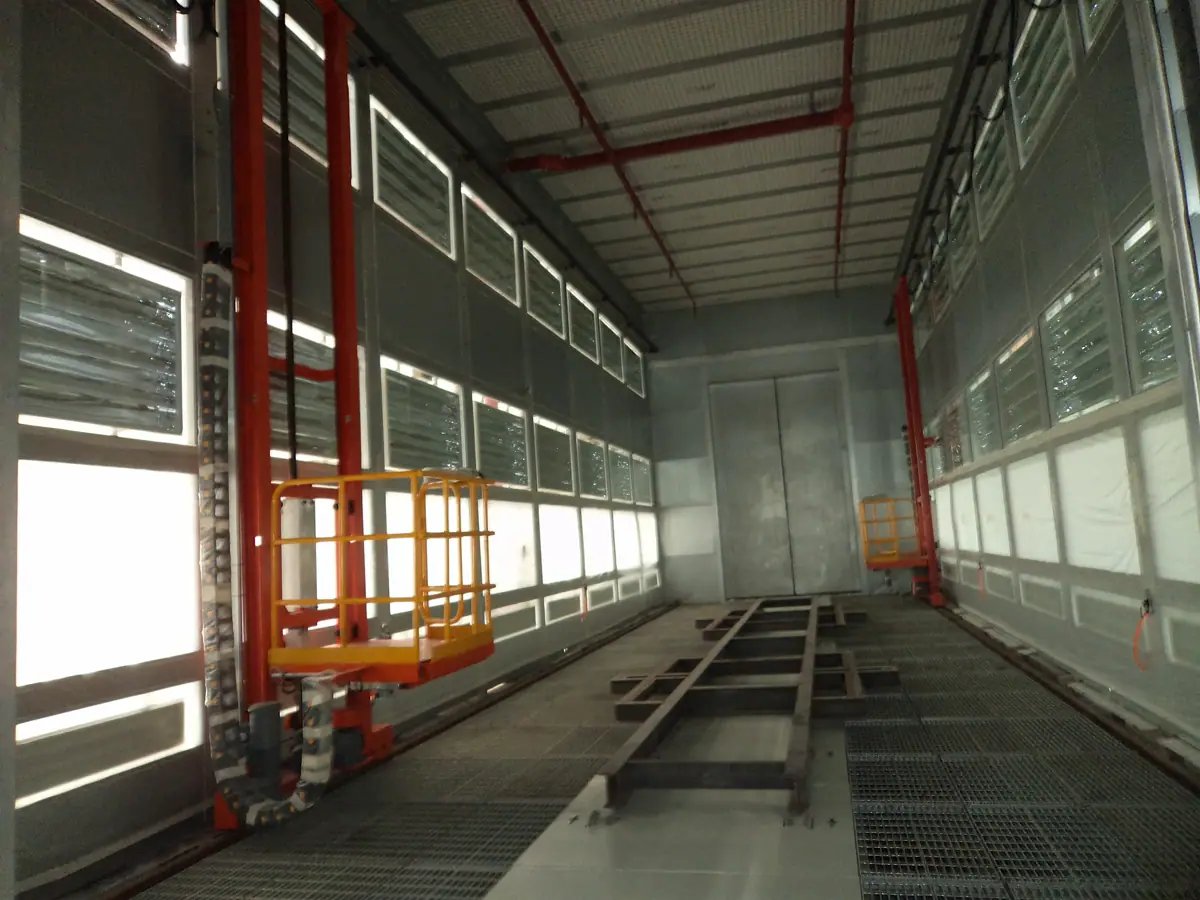
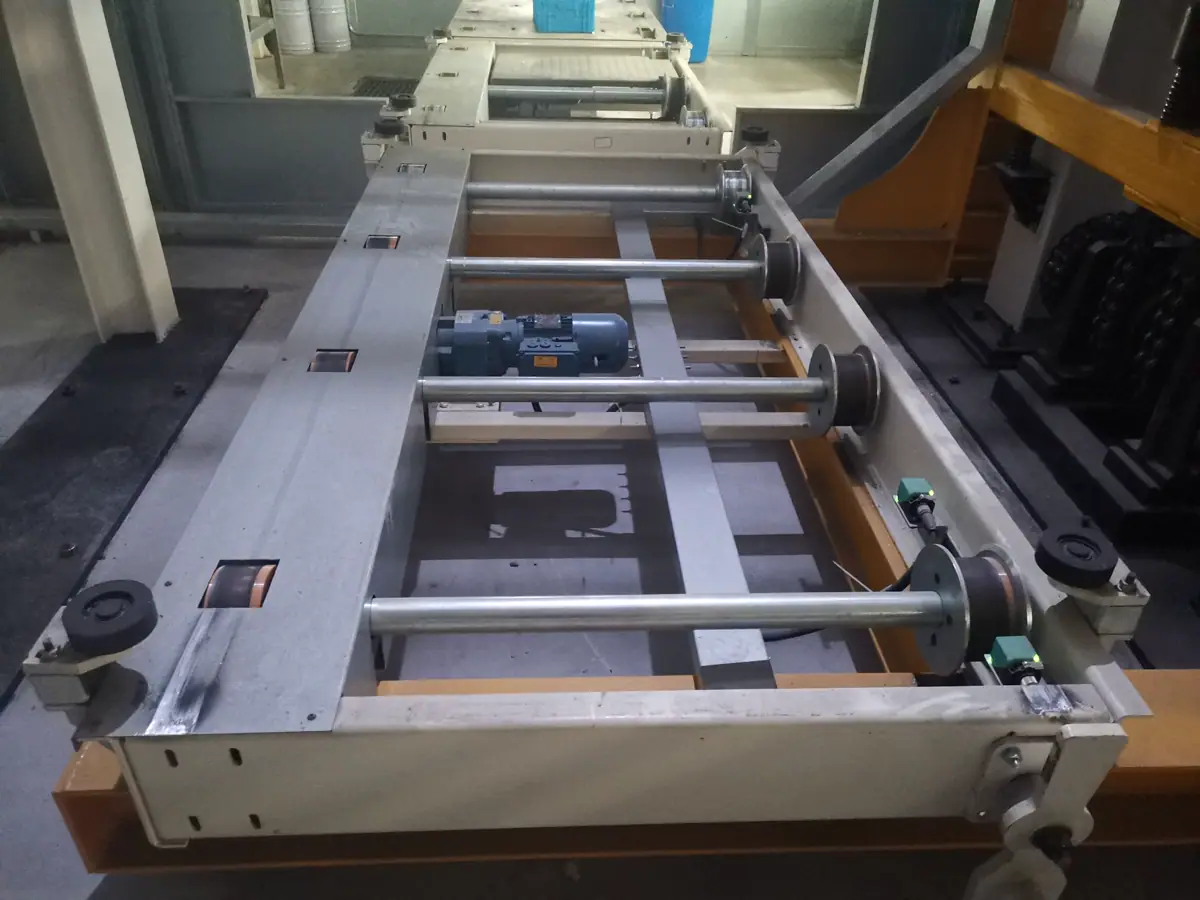
Floor conveyors, platforms and roller tables are suitable for bodies, frames, tanks and other heavy products that cannot be conveniently suspended. Roller systems can transfer skids or pallets between workstations, while powered carts and transfer machines can change direction or move loads across parallel lines. Self-propelled hoists provide independent carriers that can stop, buffer or select different routes. YUEZE product documentation covers these conveyor types because different coating projects require different combinations of load capacity, positioning and flexibility.
Balance Speed, Dwell Time and Buffers
A continuous conveyor speed is normally calculated from the target output, part spacing and required process time. If parts need twenty minutes in an oven, the effective heated length must support that dwell at the selected speed. Pretreatment stages require similar checks for spray exposure, draining and dry-off. The calculation should include production gaps, loading efficiency and realistic changeover rather than assuming every carrier is always occupied.
Buffers provide resilience when processes have different rhythms. A preparation area may release workpieces in batches, while spraying and curing run continuously. Inspection or manual touch-up can vary by part. Independent carriers or accumulation zones allow short delays without stopping the entire line. Controls should track carrier position and product recipe so each workpiece receives the correct route and process settings. A balanced line uses automation to manage variation, not simply to move faster.
Capture Dust and Paint Mist at the Source
Grinding, blasting, powder spraying and liquid painting create different airborne contaminants. Each source needs a capture method suited to particle size, process energy and airflow. Dust collectors with filter cartridges and pulse cleaning may serve blasting, polishing or powder-related tasks. Paint-mist systems may use dry filtration or water-curtain arrangements. Capture hoods, booth openings and duct velocities should be designed together so contaminants move toward the treatment equipment instead of into the workshop.
The conveyor can either help or hinder capture. Large openings for moving workpieces increase the air volume needed to maintain containment. Closely spaced hangers may disturb airflow, while heavy fixtures can block floor extraction. Doors, vestibules or automatic openings can reduce uncontrolled air loss. Filter condition should be monitored, and replacement access should not conflict with rails, platforms or other equipment. Good integration makes environmental performance maintainable during normal production.
Match Waste-Gas Treatment to Actual Conditions
Liquid coating and curing may produce VOC-bearing exhaust. Treatment selection depends on air volume, concentration, temperature, coating composition and local emission requirements. Activated-carbon adsorption, catalytic oxidation, regenerative processes or combined systems may be evaluated for different conditions. It is not responsible to select equipment from exhaust volume alone. Process data and, where appropriate, pollutant testing should guide the engineering decision.
Air balance matters across the complete system. Exhaust from a booth must be replaced with suitable supply air, and oven ventilation must preserve safe operation without wasting heat. Duct routing, fan location, noise, fire protection and access all affect the final layout. YUEZE materials describe waste-gas treatment and dust collection as equipment that can be integrated with coating lines, allowing interfaces to be considered during design instead of after production equipment is already fixed in place.
Use Controls to Coordinate Safe Operation
The control system should express the process relationships clearly. A spray station should not run without the required ventilation. Heating should respond safely to fan, pressure and temperature faults. Conveyors should stop or divert workpieces when doors, platforms or downstream zones are unavailable. Emergency stops and interlocks need defined zones so an incident can be handled without creating a second hazard elsewhere on the line.
For an effective technical discussion, provide the supplier with workpiece drawings, load and spacing, process stages, target output, workshop layout, utility conditions and environmental requirements. Identify manual operations, inspection points and expected future products. This information allows conveyor routes, booths, ovens, dust collection and waste-gas equipment to be reviewed as one coordinated project. Integration at the design stage improves space use, supports stable coating quality and gives maintenance teams a system they can understand and service over the long term.
Discuss Your Requirements with YUEZE
Every coating and conveying project is different. Send your workpiece drawings, capacity, process and site information for a project-specific equipment discussion.
Contact the Project Team